Penguin droppings may be making Antarctic snow melt faster, study finds
Penguin droppings may be making Antarctic snow melt faster, study finds
Penguin droppings may be making Antarctic snow melt faster, study finds
Key points
اہم نکات
मुख्य बातें
- Penguin droppings are helping green algae grow on snow along the Antarctic Peninsula, and that green snow absorbs far more sunlight than clean white snow, a new study finds.
- Researchers found much higher levels of phosphate, a nutrient found in guano, in green snow than in red snow.
- Green snow absorbs about 40 percent more solar energy than clean snow, while red snow absorbs about 20 percent more, so the algae-tinted patches melt faster.
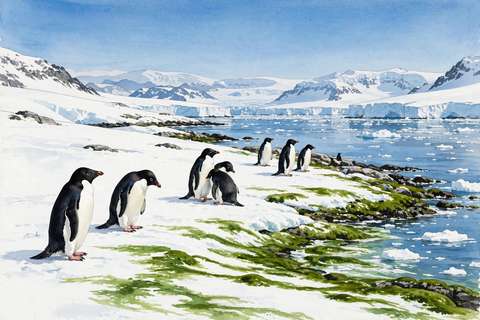
Penguin droppings are helping green algae grow on snow along the Antarctic Peninsula, and that green snow absorbs far more sunlight than clean white snow, a new study finds. Researchers found much higher levels of phosphate, a nutrient found in guano, in green snow than in red snow. Green snow absorbs about 40 percent more solar energy than clean snow, while red snow absorbs about 20 percent more, so the algae-tinted patches melt faster. The scientists say current projections of Antarctic melting do not yet account for this wildlife effect, and more data is needed before it can be added to climate models.
Penguin droppings are helping green algae grow on snow along the Antarctic Peninsula, and that green snow absorbs far more sunlight than clean white snow, a new study finds. Researchers found much higher levels of phosphate, a nutrient found in guano, in green snow than in red snow. Green snow absorbs about 40 percent more solar energy than clean snow, while red snow absorbs about 20 percent more, so the algae-tinted patches melt faster. The scientists say current projections of Antarctic melting do not yet account for this wildlife effect, and more data is needed before it can be added to climate models.
Penguin droppings are helping green algae grow on snow along the Antarctic Peninsula, and that green snow absorbs far more sunlight than clean white snow, a new study finds. Researchers found much higher levels of phosphate, a nutrient found in guano, in green snow than in red snow. Green snow absorbs about 40 percent more solar energy than clean snow, while red snow absorbs about 20 percent more, so the algae-tinted patches melt faster. The scientists say current projections of Antarctic melting do not yet account for this wildlife effect, and more data is needed before it can be added to climate models.
Most read
سب سے زیادہ پڑھی گئی
सबसे ज़्यादा पढ़ी गई
- Loading...
Get news in your inbox
خبریں اپنے ان باکس میں حاصل کریں
खबरें अपने इनबॉक्स में पाएं
One email when new stories are published. No spam, unsubscribe anytime.
نئی خبریں شائع ہونے پر ایک ای میل۔ کوئی سپیم نہیں، کسی بھی وقت ان سبسکرائب کریں۔
नई खबरें प्रकाशित होने पर एक ईमेल। कोई स्पैम नहीं, कभी भी अनसब्सक्राइब करें।