Discarded peels and cores can hold far more fibre than the flesh, study finds
Discarded peels and cores can hold far more fibre than the flesh, study finds
Discarded peels and cores can hold far more fibre than the flesh, study finds
Key points
اہم نکات
मुख्य बातें
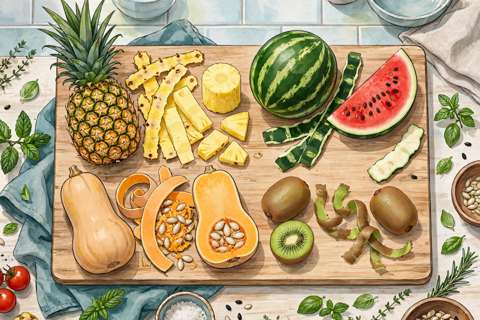
- A King's College London study of 12 common fruits and vegetables found that in 10 of them, the parts people usually throw away held more fibre by weight than the parts they eat.
- Pineapple skin and core together held about 453 percent more fibre than the flesh, watermelon rind about 425 percent more, and butternut squash skin, seeds and innards about 362 percent more.
- The researchers say using these parts safely, such as roasting squash with its skin on, could raise fibre intake and cut food waste, but they warn against eating pineapple skin directly because it can contain naturally occurring compounds of concern, and advise washing produce thoroughly.
A King's College London study of 12 common fruits and vegetables found that in 10 of them, the parts people usually throw away held more fibre by weight than the parts they eat. Pineapple skin and core together held about 453 percent more fibre than the flesh, watermelon rind about 425 percent more, and butternut squash skin, seeds and innards about 362 percent more. The researchers say using these parts safely, such as roasting squash with its skin on, could raise fibre intake and cut food waste, but they warn against eating pineapple skin directly because it can contain naturally occurring compounds of concern, and advise washing produce thoroughly.
A King's College London study of 12 common fruits and vegetables found that in 10 of them, the parts people usually throw away held more fibre by weight than the parts they eat. Pineapple skin and core together held about 453 percent more fibre than the flesh, watermelon rind about 425 percent more, and butternut squash skin, seeds and innards about 362 percent more. The researchers say using these parts safely, such as roasting squash with its skin on, could raise fibre intake and cut food waste, but they warn against eating pineapple skin directly because it can contain naturally occurring compounds of concern, and advise washing produce thoroughly.
A King's College London study of 12 common fruits and vegetables found that in 10 of them, the parts people usually throw away held more fibre by weight than the parts they eat. Pineapple skin and core together held about 453 percent more fibre than the flesh, watermelon rind about 425 percent more, and butternut squash skin, seeds and innards about 362 percent more. The researchers say using these parts safely, such as roasting squash with its skin on, could raise fibre intake and cut food waste, but they warn against eating pineapple skin directly because it can contain naturally occurring compounds of concern, and advise washing produce thoroughly.
Most read
سب سے زیادہ پڑھی گئی
सबसे ज़्यादा पढ़ी गई
- Loading...
Get news in your inbox
خبریں اپنے ان باکس میں حاصل کریں
खबरें अपने इनबॉक्स में पाएं
One email when new stories are published. No spam, unsubscribe anytime.
نئی خبریں شائع ہونے پر ایک ای میل۔ کوئی سپیم نہیں، کسی بھی وقت ان سبسکرائب کریں۔
नई खबरें प्रकाशित होने पर एक ईमेल। कोई स्पैम नहीं, कभी भी अनसब्सक्राइब करें।