Bee nest linings could inspire plastics that break down in soil
Bee nest linings could inspire plastics that break down in soil
Bee nest linings could inspire plastics that break down in soil
Key points
اہم نکات
मुख्य बातें
- A study in the Proceedings of the National Academy of Sciences has found that the natural polyester lining made by cellophane bees breaks down surprisingly fast in soil, offering a model for more sustainable plastics.
- The lining fell from 73 percent to 40 percent of the nest by weight within four months, cracked by seven months and turned brittle by eleven months, even though similar synthetic plastics resist breakdown.
- Researchers say understanding why it degrades so quickly could help design single-use plastics that stay useful during use but do not linger in the environment.
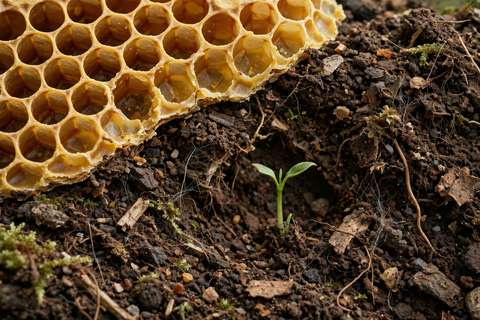
A study in the Proceedings of the National Academy of Sciences has found that the natural polyester lining made by cellophane bees breaks down surprisingly fast in soil, offering a model for more sustainable plastics. The lining fell from 73 percent to 40 percent of the nest by weight within four months, cracked by seven months and turned brittle by eleven months, even though similar synthetic plastics resist breakdown. Researchers say understanding why it degrades so quickly could help design single-use plastics that stay useful during use but do not linger in the environment.
A study in the Proceedings of the National Academy of Sciences has found that the natural polyester lining made by cellophane bees breaks down surprisingly fast in soil, offering a model for more sustainable plastics. The lining fell from 73 percent to 40 percent of the nest by weight within four months, cracked by seven months and turned brittle by eleven months, even though similar synthetic plastics resist breakdown. Researchers say understanding why it degrades so quickly could help design single-use plastics that stay useful during use but do not linger in the environment.
A study in the Proceedings of the National Academy of Sciences has found that the natural polyester lining made by cellophane bees breaks down surprisingly fast in soil, offering a model for more sustainable plastics. The lining fell from 73 percent to 40 percent of the nest by weight within four months, cracked by seven months and turned brittle by eleven months, even though similar synthetic plastics resist breakdown. Researchers say understanding why it degrades so quickly could help design single-use plastics that stay useful during use but do not linger in the environment.
Most read
سب سے زیادہ پڑھی گئی
सबसे ज़्यादा पढ़ी गई
- Loading...
Get news in your inbox
خبریں اپنے ان باکس میں حاصل کریں
खबरें अपने इनबॉक्स में पाएं
One email when new stories are published. No spam, unsubscribe anytime.
نئی خبریں شائع ہونے پر ایک ای میل۔ کوئی سپیم نہیں، کسی بھی وقت ان سبسکرائب کریں۔
नई खबरें प्रकाशित होने पर एक ईमेल। कोई स्पैम नहीं, कभी भी अनसब्सक्राइब करें।