Asteroid deflection depends on aim, faster new model shows
Asteroid deflection depends on aim, faster new model shows
Asteroid deflection depends on aim, faster new model shows
Key points
اہم نکات
मुख्य बातें
- Researchers at Sandia National Laboratories have built a much faster model for how a nuclear blast near an asteroid could push it off course.
- The new method, combining two existing simulation codes, runs more than 1,600 times faster than earlier approaches and can handle the lumpy, irregular shapes real asteroids have, instead of treating them as perfect spheres.
- Simulations of three well-studied asteroids, Golevka, Bennu and Itokawa, found that blasting different sides of the same asteroid could change its speed by as much as five times, while its spin could vary by up to 17 times.
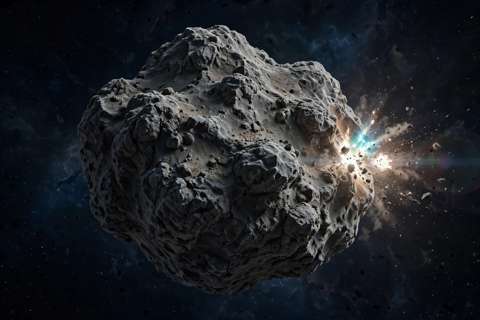
Researchers at Sandia National Laboratories have built a much faster model for how a nuclear blast near an asteroid could push it off course. The new method, combining two existing simulation codes, runs more than 1,600 times faster than earlier approaches and can handle the lumpy, irregular shapes real asteroids have, instead of treating them as perfect spheres. Simulations of three well-studied asteroids, Golevka, Bennu and Itokawa, found that blasting different sides of the same asteroid could change its speed by as much as five times, while its spin could vary by up to 17 times. The team, writing in the journal Icarus, says knowing an asteroid's exact shape and picking the right side to target could be critical if humanity ever has to deflect one, though the model still cannot fully predict how a whole asteroid might break apart.
Researchers at Sandia National Laboratories have built a much faster model for how a nuclear blast near an asteroid could push it off course. The new method, combining two existing simulation codes, runs more than 1,600 times faster than earlier approaches and can handle the lumpy, irregular shapes real asteroids have, instead of treating them as perfect spheres. Simulations of three well-studied asteroids, Golevka, Bennu and Itokawa, found that blasting different sides of the same asteroid could change its speed by as much as five times, while its spin could vary by up to 17 times. The team, writing in the journal Icarus, says knowing an asteroid's exact shape and picking the right side to target could be critical if humanity ever has to deflect one, though the model still cannot fully predict how a whole asteroid might break apart.
Researchers at Sandia National Laboratories have built a much faster model for how a nuclear blast near an asteroid could push it off course. The new method, combining two existing simulation codes, runs more than 1,600 times faster than earlier approaches and can handle the lumpy, irregular shapes real asteroids have, instead of treating them as perfect spheres. Simulations of three well-studied asteroids, Golevka, Bennu and Itokawa, found that blasting different sides of the same asteroid could change its speed by as much as five times, while its spin could vary by up to 17 times. The team, writing in the journal Icarus, says knowing an asteroid's exact shape and picking the right side to target could be critical if humanity ever has to deflect one, though the model still cannot fully predict how a whole asteroid might break apart.
Most read
سب سے زیادہ پڑھی گئی
सबसे ज़्यादा पढ़ी गई
- Loading...
Get news in your inbox
خبریں اپنے ان باکس میں حاصل کریں
खबरें अपने इनबॉक्स में पाएं
One email when new stories are published. No spam, unsubscribe anytime.
نئی خبریں شائع ہونے پر ایک ای میل۔ کوئی سپیم نہیں، کسی بھی وقت ان سبسکرائب کریں۔
नई खबरें प्रकाशित होने पर एक ईमेल। कोई स्पैम नहीं, कभी भी अनसब्सक्राइब करें।