45-Nucleotide RNA Revives Life-Origin Debate
45-Nucleotide RNA Revives Life-Origin Debate
45-Nucleotide RNA Revives Life-Origin Debate
Key points
اہم نکات
मुख्य बातें
- 45 nucleotides — that is all it took for a lab-built RNA molecule to copy another RNA strand, giving new life to the idea that life on Earth began in an 'RNA world'.
- The molecule, named QT45 and built by researchers at the MRC Laboratory of Molecular Biology, can capture and copy a second RNA strand, showing self-replication does not need the large molecules earlier experiments demanded.
- The RNA-world idea says the first life was built from RNA alone, because RNA can both store genetic information and speed up chemical reactions, doing the jobs DNA and proteins do today.
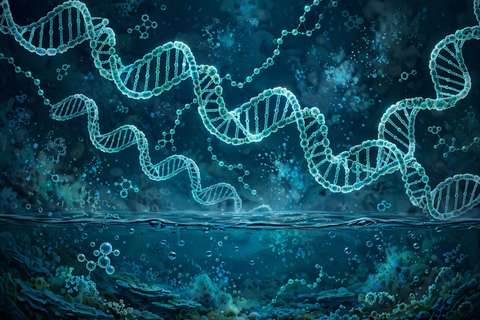
45 nucleotides — that is all it took for a lab-built RNA molecule to copy another RNA strand, giving new life to the idea that life on Earth began in an 'RNA world'. The molecule, named QT45 and built by researchers at the MRC Laboratory of Molecular Biology, can capture and copy a second RNA strand, showing self-replication does not need the large molecules earlier experiments demanded. The RNA-world idea says the first life was built from RNA alone, because RNA can both store genetic information and speed up chemical reactions, doing the jobs DNA and proteins do today. But the case is far from closed: earlier work found that mutations usually destroy such molecules' copying ability, and only tiny RNAs of 10 to 15 nucleotides have been seen assembling on their own. Whether the young Earth ever had the right conditions for an RNA world remains unknown.
45 nucleotides — that is all it took for a lab-built RNA molecule to copy another RNA strand, giving new life to the idea that life on Earth began in an 'RNA world'. The molecule, named QT45 and built by researchers at the MRC Laboratory of Molecular Biology, can capture and copy a second RNA strand, showing self-replication does not need the large molecules earlier experiments demanded. The RNA-world idea says the first life was built from RNA alone, because RNA can both store genetic information and speed up chemical reactions, doing the jobs DNA and proteins do today. But the case is far from closed: earlier work found that mutations usually destroy such molecules' copying ability, and only tiny RNAs of 10 to 15 nucleotides have been seen assembling on their own. Whether the young Earth ever had the right conditions for an RNA world remains unknown.
45 nucleotides — that is all it took for a lab-built RNA molecule to copy another RNA strand, giving new life to the idea that life on Earth began in an 'RNA world'. The molecule, named QT45 and built by researchers at the MRC Laboratory of Molecular Biology, can capture and copy a second RNA strand, showing self-replication does not need the large molecules earlier experiments demanded. The RNA-world idea says the first life was built from RNA alone, because RNA can both store genetic information and speed up chemical reactions, doing the jobs DNA and proteins do today. But the case is far from closed: earlier work found that mutations usually destroy such molecules' copying ability, and only tiny RNAs of 10 to 15 nucleotides have been seen assembling on their own. Whether the young Earth ever had the right conditions for an RNA world remains unknown.
Most read
سب سے زیادہ پڑھی گئی
सबसे ज़्यादा पढ़ी गई
- Loading...
Get news in your inbox
خبریں اپنے ان باکس میں حاصل کریں
खबरें अपने इनबॉक्स में पाएं
One email when new stories are published. No spam, unsubscribe anytime.
نئی خبریں شائع ہونے پر ایک ای میل۔ کوئی سپیم نہیں، کسی بھی وقت ان سبسکرائب کریں۔
नई खबरें प्रकाशित होने पर एक ईमेल। कोई स्पैम नहीं, कभी भी अनसब्सक्राइब करें।