Hubble sees a 93-billion-mile 'Cat's Tail' of dust in a nearby star system
Hubble sees a 93-billion-mile 'Cat's Tail' of dust in a nearby star system
Hubble sees a 93-billion-mile 'Cat's Tail' of dust in a nearby star system
Key points
اہم نکات
मुख्य बातें
- Astronomers have seen a huge ribbon of dust in the young Beta Pictoris star system, just 63 light-years from Earth, in visible light for the first time.
- Nicknamed the 'Cat's Tail', the structure stretches about 1,000 astronomical units, or roughly 93 billion miles.
- New Hubble images suggest it may lie sideways across our view rather than stretching away behind the star.
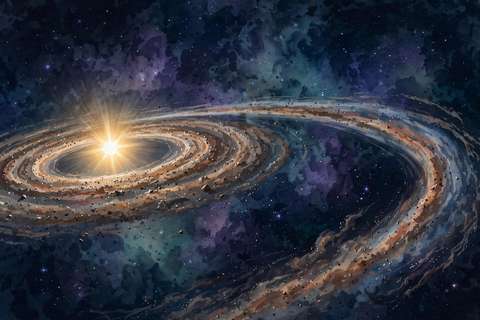
Astronomers have seen a huge ribbon of dust in the young Beta Pictoris star system, just 63 light-years from Earth, in visible light for the first time. Nicknamed the 'Cat's Tail', the structure stretches about 1,000 astronomical units, or roughly 93 billion miles. New Hubble images suggest it may lie sideways across our view rather than stretching away behind the star. Scientists think it is the debris left when two Pluto-sized bodies collided, and the findings were published in The Astrophysical Journal Letters.
Astronomers have seen a huge ribbon of dust in the young Beta Pictoris star system, just 63 light-years from Earth, in visible light for the first time. Nicknamed the 'Cat's Tail', the structure stretches about 1,000 astronomical units, or roughly 93 billion miles. New Hubble images suggest it may lie sideways across our view rather than stretching away behind the star. Scientists think it is the debris left when two Pluto-sized bodies collided, and the findings were published in The Astrophysical Journal Letters.
Astronomers have seen a huge ribbon of dust in the young Beta Pictoris star system, just 63 light-years from Earth, in visible light for the first time. Nicknamed the 'Cat's Tail', the structure stretches about 1,000 astronomical units, or roughly 93 billion miles. New Hubble images suggest it may lie sideways across our view rather than stretching away behind the star. Scientists think it is the debris left when two Pluto-sized bodies collided, and the findings were published in The Astrophysical Journal Letters.
Most read
سب سے زیادہ پڑھی گئی
सबसे ज़्यादा पढ़ी गई
- Loading...
Get news in your inbox
خبریں اپنے ان باکس میں حاصل کریں
खबरें अपने इनबॉक्स में पाएं
One email when new stories are published. No spam, unsubscribe anytime.
نئی خبریں شائع ہونے پر ایک ای میل۔ کوئی سپیم نہیں، کسی بھی وقت ان سبسکرائب کریں۔
नई खबरें प्रकाशित होने पर एक ईमेल। कोई स्पैम नहीं, कभी भी अनसब्सक्राइब करें।