Blood vessels can still grow without a key growth signal, Nature study finds
Blood vessels can still grow without a key growth signal, Nature study finds
Blood vessels can still grow without a key growth signal, Nature study finds
Key points
اہم نکات
मुख्य बातें
- Scientists have found that blood vessels can still form even without VEGFR2, a receptor long thought to be essential for growing new vessels.
- In mouse experiments published in Nature, cells lacking the receptor adapted by taking on vein-like features, a process the researchers call venousization, and went on to build new vessels in most organs.
- The cells also switched on other growth signals to compensate.
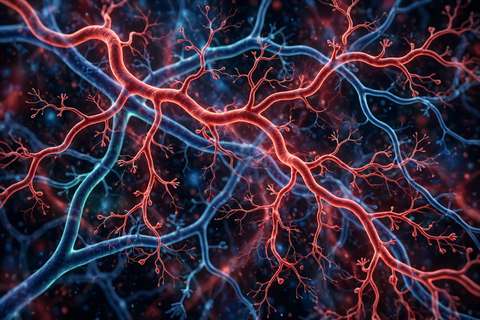
Scientists have found that blood vessels can still form even without VEGFR2, a receptor long thought to be essential for growing new vessels. In mouse experiments published in Nature, cells lacking the receptor adapted by taking on vein-like features, a process the researchers call venousization, and went on to build new vessels in most organs. The cells also switched on other growth signals to compensate. The finding helps explain why some tumours keep growing blood vessels despite anti-VEGF cancer drugs, and points to new targets that could block that resistance.
Scientists have found that blood vessels can still form even without VEGFR2, a receptor long thought to be essential for growing new vessels. In mouse experiments published in Nature, cells lacking the receptor adapted by taking on vein-like features, a process the researchers call venousization, and went on to build new vessels in most organs. The cells also switched on other growth signals to compensate. The finding helps explain why some tumours keep growing blood vessels despite anti-VEGF cancer drugs, and points to new targets that could block that resistance.
Scientists have found that blood vessels can still form even without VEGFR2, a receptor long thought to be essential for growing new vessels. In mouse experiments published in Nature, cells lacking the receptor adapted by taking on vein-like features, a process the researchers call venousization, and went on to build new vessels in most organs. The cells also switched on other growth signals to compensate. The finding helps explain why some tumours keep growing blood vessels despite anti-VEGF cancer drugs, and points to new targets that could block that resistance.
Most read
سب سے زیادہ پڑھی گئی
सबसे ज़्यादा पढ़ी गई
- Loading...
Get news in your inbox
خبریں اپنے ان باکس میں حاصل کریں
खबरें अपने इनबॉक्स में पाएं
One email when new stories are published. No spam, unsubscribe anytime.
نئی خبریں شائع ہونے پر ایک ای میل۔ کوئی سپیم نہیں، کسی بھی وقت ان سبسکرائب کریں۔
नई खबरें प्रकाशित होने पर एक ईमेल। कोई स्पैम नहीं, कभी भी अनसब्सक्राइब करें।