Physicists sink a telescope 1.5 miles under the sea to put Einstein's relativity to the test
Physicists sink a telescope 1.5 miles under the sea to put Einstein's relativity to the test
Physicists sink a telescope 1.5 miles under the sea to put Einstein's relativity to the test
Key points
اہم نکات
मुख्य बातें
- Physicists have used a neutrino telescope sitting 1.5 miles under the Mediterranean Sea to test a principle at the heart of Einstein's theory of relativity.
- The KM3NeT/ORCA detector, off the coast of France, analysed 5,828 neutrino events collected over about 1.4 years with only six of its planned 100-plus sensor strings in place.
- The team found no sign that Lorentz invariance — the rule that the laws of physics stay the same no matter how an experiment moves or faces — is broken, and set new limits on how large any such effect could be.
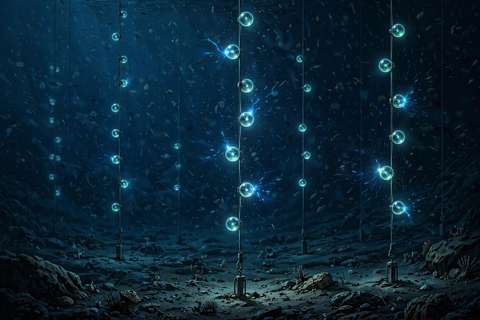
Physicists have used a neutrino telescope sitting 1.5 miles under the Mediterranean Sea to test a principle at the heart of Einstein's theory of relativity. The KM3NeT/ORCA detector, off the coast of France, analysed 5,828 neutrino events collected over about 1.4 years with only six of its planned 100-plus sensor strings in place. The team found no sign that Lorentz invariance — the rule that the laws of physics stay the same no matter how an experiment moves or faces — is broken, and set new limits on how large any such effect could be. The results, published in the Journal of Cosmology and Astroparticle Physics, already rival those of long-running experiments such as Super-Kamiokande and IceCube, even though the detector is still being built.
Physicists have used a neutrino telescope sitting 1.5 miles under the Mediterranean Sea to test a principle at the heart of Einstein's theory of relativity. The KM3NeT/ORCA detector, off the coast of France, analysed 5,828 neutrino events collected over about 1.4 years with only six of its planned 100-plus sensor strings in place. The team found no sign that Lorentz invariance — the rule that the laws of physics stay the same no matter how an experiment moves or faces — is broken, and set new limits on how large any such effect could be. The results, published in the Journal of Cosmology and Astroparticle Physics, already rival those of long-running experiments such as Super-Kamiokande and IceCube, even though the detector is still being built.
Physicists have used a neutrino telescope sitting 1.5 miles under the Mediterranean Sea to test a principle at the heart of Einstein's theory of relativity. The KM3NeT/ORCA detector, off the coast of France, analysed 5,828 neutrino events collected over about 1.4 years with only six of its planned 100-plus sensor strings in place. The team found no sign that Lorentz invariance — the rule that the laws of physics stay the same no matter how an experiment moves or faces — is broken, and set new limits on how large any such effect could be. The results, published in the Journal of Cosmology and Astroparticle Physics, already rival those of long-running experiments such as Super-Kamiokande and IceCube, even though the detector is still being built.
Most read
سب سے زیادہ پڑھی گئی
सबसे ज़्यादा पढ़ी गई
- Loading...
Get news in your inbox
خبریں اپنے ان باکس میں حاصل کریں
खबरें अपने इनबॉक्स में पाएं
One email when new stories are published. No spam, unsubscribe anytime.
نئی خبریں شائع ہونے پر ایک ای میل۔ کوئی سپیم نہیں، کسی بھی وقت ان سبسکرائب کریں۔
नई खबरें प्रकाशित होने पर एक ईमेल। कोई स्पैम नहीं, कभी भी अनसब्सक्राइब करें।