Scientists crush water between diamonds and see a change never observed in a lab
Scientists crush water between diamonds and see a change never observed in a lab
Scientists crush water between diamonds and see a change never observed in a lab
Key points
اہم نکات
मुख्य बातें
- Researchers in the United States have squeezed a tiny droplet of water between two diamond tips to pressures beyond 222 gigapascals, about 2.2 million times the pressure at Earth's surface, and watched its atomic structure warp and lose symmetry.
- The change, which mimics conditions inside ice giants such as Uranus and Neptune, had been predicted by computer simulations but never before observed in a laboratory.
- The findings, published in Communications Chemistry, could improve understanding of how such planets conduct heat, shape magnetic fields and hold their density.
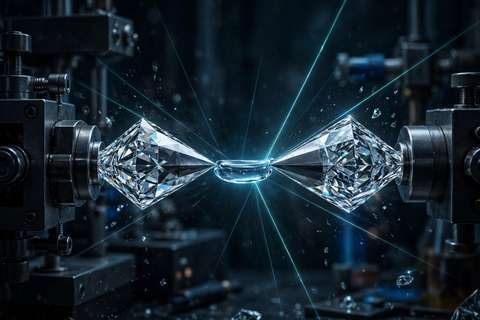
Researchers in the United States have squeezed a tiny droplet of water between two diamond tips to pressures beyond 222 gigapascals, about 2.2 million times the pressure at Earth's surface, and watched its atomic structure warp and lose symmetry. The change, which mimics conditions inside ice giants such as Uranus and Neptune, had been predicted by computer simulations but never before observed in a laboratory. The findings, published in Communications Chemistry, could improve understanding of how such planets conduct heat, shape magnetic fields and hold their density.
Researchers in the United States have squeezed a tiny droplet of water between two diamond tips to pressures beyond 222 gigapascals, about 2.2 million times the pressure at Earth's surface, and watched its atomic structure warp and lose symmetry. The change, which mimics conditions inside ice giants such as Uranus and Neptune, had been predicted by computer simulations but never before observed in a laboratory. The findings, published in Communications Chemistry, could improve understanding of how such planets conduct heat, shape magnetic fields and hold their density.
Researchers in the United States have squeezed a tiny droplet of water between two diamond tips to pressures beyond 222 gigapascals, about 2.2 million times the pressure at Earth's surface, and watched its atomic structure warp and lose symmetry. The change, which mimics conditions inside ice giants such as Uranus and Neptune, had been predicted by computer simulations but never before observed in a laboratory. The findings, published in Communications Chemistry, could improve understanding of how such planets conduct heat, shape magnetic fields and hold their density.
Most read
سب سے زیادہ پڑھی گئی
सबसे ज़्यादा पढ़ी गई
- Loading...
Get news in your inbox
خبریں اپنے ان باکس میں حاصل کریں
खबरें अपने इनबॉक्स में पाएं
One email when new stories are published. No spam, unsubscribe anytime.
نئی خبریں شائع ہونے پر ایک ای میل۔ کوئی سپیم نہیں، کسی بھی وقت ان سبسکرائب کریں۔
नई खबरें प्रकाशित होने पर एक ईमेल। कोई स्पैम नहीं, कभी भी अनसब्सक्राइब करें।