3D-Printed Alloy Stays Strong From -196°C to 600°C
3D-Printed Alloy Stays Strong From -196°C to 600°C
3D-Printed Alloy Stays Strong From -196°C to 600°C
Key points
اہم نکات
मुख्य बातें
- Scientists in South Korea have 3D-printed a metal alloy that stays strong and stretchy from minus 196 degrees Celsius to 600 degrees, without any extra heat treatment.
- A team led by Professor Hyung Seop Kim at POSTECH built the high-entropy alloy, made of eight elements including cobalt, chromium, iron and nickel, layer by layer with a laser, using the structure formed during printing itself to give it strength.
- In tests at minus 196, room temperature and 600 degrees, the metal kept a yield strength above 1 gigapascal and stretched by 19 to 26 percent before breaking.
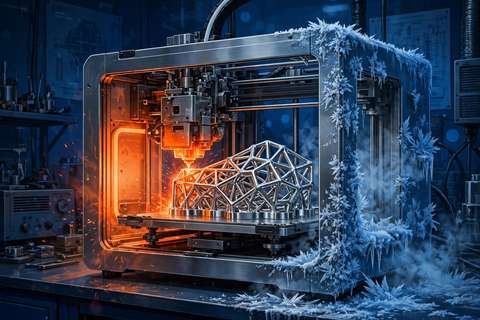
Scientists in South Korea have 3D-printed a metal alloy that stays strong and stretchy from minus 196 degrees Celsius to 600 degrees, without any extra heat treatment. A team led by Professor Hyung Seop Kim at POSTECH built the high-entropy alloy, made of eight elements including cobalt, chromium, iron and nickel, layer by layer with a laser, using the structure formed during printing itself to give it strength. In tests at minus 196, room temperature and 600 degrees, the metal kept a yield strength above 1 gigapascal and stretched by 19 to 26 percent before breaking. The findings were published on November 2 in the journal Nature Materials. The alloy could one day be used in parts for cryogenic storage and aerospace, but the researchers say it still needs testing in large components and under long-term use before industry can adopt it.
Scientists in South Korea have 3D-printed a metal alloy that stays strong and stretchy from minus 196 degrees Celsius to 600 degrees, without any extra heat treatment. A team led by Professor Hyung Seop Kim at POSTECH built the high-entropy alloy, made of eight elements including cobalt, chromium, iron and nickel, layer by layer with a laser, using the structure formed during printing itself to give it strength. In tests at minus 196, room temperature and 600 degrees, the metal kept a yield strength above 1 gigapascal and stretched by 19 to 26 percent before breaking. The findings were published on November 2 in the journal Nature Materials. The alloy could one day be used in parts for cryogenic storage and aerospace, but the researchers say it still needs testing in large components and under long-term use before industry can adopt it.
Scientists in South Korea have 3D-printed a metal alloy that stays strong and stretchy from minus 196 degrees Celsius to 600 degrees, without any extra heat treatment. A team led by Professor Hyung Seop Kim at POSTECH built the high-entropy alloy, made of eight elements including cobalt, chromium, iron and nickel, layer by layer with a laser, using the structure formed during printing itself to give it strength. In tests at minus 196, room temperature and 600 degrees, the metal kept a yield strength above 1 gigapascal and stretched by 19 to 26 percent before breaking. The findings were published on November 2 in the journal Nature Materials. The alloy could one day be used in parts for cryogenic storage and aerospace, but the researchers say it still needs testing in large components and under long-term use before industry can adopt it.
Most read
سب سے زیادہ پڑھی گئی
सबसे ज़्यादा पढ़ी गई
- Loading...
Get news in your inbox
خبریں اپنے ان باکس میں حاصل کریں
खबरें अपने इनबॉक्स में पाएं
One email when new stories are published. No spam, unsubscribe anytime.
نئی خبریں شائع ہونے پر ایک ای میل۔ کوئی سپیم نہیں، کسی بھی وقت ان سبسکرائب کریں۔
नई खबरें प्रकाशित होने पर एक ईमेल। कोई स्पैम नहीं, कभी भी अनसब्सक्राइब करें।