Ocean Carbon Sink Grows as Land Sink Stalls
Ocean Carbon Sink Grows as Land Sink Stalls
Ocean Carbon Sink Grows as Land Sink Stalls
Key points
اہم نکات
मुख्य बातें
- The ocean is absorbing more carbon dioxide while the amount taken up by land has stayed flat for more than 30 years, a new study in the journal Science has found.
- Led by Scripps Institution of Oceanography, the study used three decades of atmospheric oxygen and carbon dioxide measurements.
- The ocean absorbed an average of 2.8 billion tonnes of carbon a year between 1990 and 2019, about 35 percent of fossil fuel emissions, and strengthened by about 0.63 billion tonnes per decade.
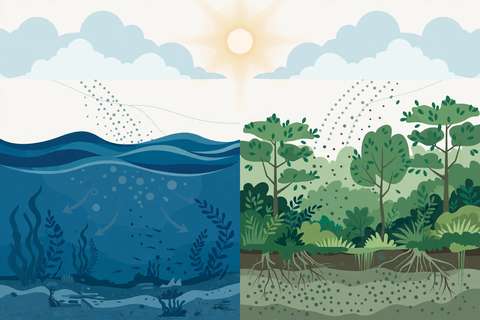
The ocean is absorbing more carbon dioxide while the amount taken up by land has stayed flat for more than 30 years, a new study in the journal Science has found. Led by Scripps Institution of Oceanography, the study used three decades of atmospheric oxygen and carbon dioxide measurements. The ocean absorbed an average of 2.8 billion tonnes of carbon a year between 1990 and 2019, about 35 percent of fossil fuel emissions, and strengthened by about 0.63 billion tonnes per decade. Land ecosystems absorbed about one billion tonnes a year, roughly 13 percent, peaking around 2009 and declining since, raising questions about how much carbon land can keep absorbing in future.
The ocean is absorbing more carbon dioxide while the amount taken up by land has stayed flat for more than 30 years, a new study in the journal Science has found. Led by Scripps Institution of Oceanography, the study used three decades of atmospheric oxygen and carbon dioxide measurements. The ocean absorbed an average of 2.8 billion tonnes of carbon a year between 1990 and 2019, about 35 percent of fossil fuel emissions, and strengthened by about 0.63 billion tonnes per decade. Land ecosystems absorbed about one billion tonnes a year, roughly 13 percent, peaking around 2009 and declining since, raising questions about how much carbon land can keep absorbing in future.
The ocean is absorbing more carbon dioxide while the amount taken up by land has stayed flat for more than 30 years, a new study in the journal Science has found. Led by Scripps Institution of Oceanography, the study used three decades of atmospheric oxygen and carbon dioxide measurements. The ocean absorbed an average of 2.8 billion tonnes of carbon a year between 1990 and 2019, about 35 percent of fossil fuel emissions, and strengthened by about 0.63 billion tonnes per decade. Land ecosystems absorbed about one billion tonnes a year, roughly 13 percent, peaking around 2009 and declining since, raising questions about how much carbon land can keep absorbing in future.
Most read
سب سے زیادہ پڑھی گئی
सबसे ज़्यादा पढ़ी गई
- Loading...
Get news in your inbox
خبریں اپنے ان باکس میں حاصل کریں
खबरें अपने इनबॉक्स में पाएं
One email when new stories are published. No spam, unsubscribe anytime.
نئی خبریں شائع ہونے پر ایک ای میل۔ کوئی سپیم نہیں، کسی بھی وقت ان سبسکرائب کریں۔
नई खबरें प्रकाशित होने पर एक ईमेल। कोई स्पैम नहीं, कभी भी अनसब्सक्राइब करें।