The next ice age began 2,000 years ago. Then, in 1960, humans abruptly ended it
The next ice age began 2,000 years ago. Then, in 1960, humans abruptly ended it
The next ice age began 2,000 years ago. Then, in 1960, humans abruptly ended it
Key points
اہم نکات
मुख्य बातें
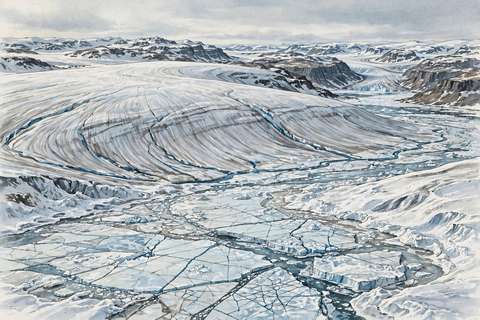
- A new study published in the journal Science argues that Earth's next ice age had already begun about 2,000 years ago, when the Barnes Ice Cap on Canada's Baffin Island started slowly growing again, and that human-driven warming abruptly reversed that growth around 1960.
- Researchers led by Columbia University's Nicolas Young dated buried plants and rocks to reconstruct the ice cap's history, finding it reached its smallest size about 3,000 years ago before expanding in response to cooler summers.
- The study's authors say the expansion marked the start of a new glaciation, though other scientists caution that growth in one ice cap alone does not prove a global glacial cycle had begun, with some models putting the next ice age about 50,000 years away.
A new study published in the journal Science argues that Earth's next ice age had already begun about 2,000 years ago, when the Barnes Ice Cap on Canada's Baffin Island started slowly growing again, and that human-driven warming abruptly reversed that growth around 1960. Researchers led by Columbia University's Nicolas Young dated buried plants and rocks to reconstruct the ice cap's history, finding it reached its smallest size about 3,000 years ago before expanding in response to cooler summers. The study's authors say the expansion marked the start of a new glaciation, though other scientists caution that growth in one ice cap alone does not prove a global glacial cycle had begun, with some models putting the next ice age about 50,000 years away. Young stressed the finding should not be read as global warming having saved humanity from an ice age.
A new study published in the journal Science argues that Earth's next ice age had already begun about 2,000 years ago, when the Barnes Ice Cap on Canada's Baffin Island started slowly growing again, and that human-driven warming abruptly reversed that growth around 1960. Researchers led by Columbia University's Nicolas Young dated buried plants and rocks to reconstruct the ice cap's history, finding it reached its smallest size about 3,000 years ago before expanding in response to cooler summers. The study's authors say the expansion marked the start of a new glaciation, though other scientists caution that growth in one ice cap alone does not prove a global glacial cycle had begun, with some models putting the next ice age about 50,000 years away. Young stressed the finding should not be read as global warming having saved humanity from an ice age.
A new study published in the journal Science argues that Earth's next ice age had already begun about 2,000 years ago, when the Barnes Ice Cap on Canada's Baffin Island started slowly growing again, and that human-driven warming abruptly reversed that growth around 1960. Researchers led by Columbia University's Nicolas Young dated buried plants and rocks to reconstruct the ice cap's history, finding it reached its smallest size about 3,000 years ago before expanding in response to cooler summers. The study's authors say the expansion marked the start of a new glaciation, though other scientists caution that growth in one ice cap alone does not prove a global glacial cycle had begun, with some models putting the next ice age about 50,000 years away. Young stressed the finding should not be read as global warming having saved humanity from an ice age.
Most read
سب سے زیادہ پڑھی گئی
सबसे ज़्यादा पढ़ी गई
- Loading...
Get news in your inbox
خبریں اپنے ان باکس میں حاصل کریں
खबरें अपने इनबॉक्स में पाएं
One email when new stories are published. No spam, unsubscribe anytime.
نئی خبریں شائع ہونے پر ایک ای میل۔ کوئی سپیم نہیں، کسی بھی وقت ان سبسکرائب کریں۔
नई खबरें प्रकाशित होने पर एक ईमेल। कोई स्पैम नहीं, कभी भी अनसब्सक्राइब करें।