Monumental 2,000-Year-Old Mongolian Tomb Excavated
Monumental 2,000-Year-Old Mongolian Tomb Excavated
Monumental 2,000-Year-Old Mongolian Tomb Excavated
Key points
اہم نکات
मुख्य बातें
- Archaeologists have finished a four-year excavation of a monumental 2,000-year-old tomb in eastern Mongolia, the largest Xiongnu burial ever found in the country.
- Tomb 160 at the Duurlig Nars cemetery stretches about 73 metres long including its entrance passage and was dug 14.5 metres deep through nine layers of stacked stone, yet its central burial chamber is small.
- The team recovered 413 artifacts, including a glass vessel thought to come from the Roman Empire, jade reflecting Chinese funerary customs, and silver horse ornaments matching finds from the Korean Peninsula.
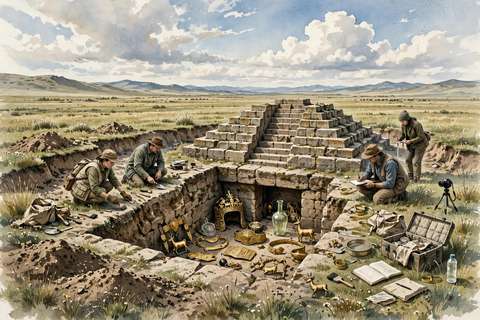
Archaeologists have finished a four-year excavation of a monumental 2,000-year-old tomb in eastern Mongolia, the largest Xiongnu burial ever found in the country. Tomb 160 at the Duurlig Nars cemetery stretches about 73 metres long including its entrance passage and was dug 14.5 metres deep through nine layers of stacked stone, yet its central burial chamber is small. The team recovered 413 artifacts, including a glass vessel thought to come from the Roman Empire, jade reflecting Chinese funerary customs, and silver horse ornaments matching finds from the Korean Peninsula. The tomb, dated to the late 1st or early 2nd century, shows the Xiongnu empire traded across a network reaching from Rome to Korea. Its owner's identity is still unknown. The dig was a joint project of the National Museum of Korea and Mongolian institutes.
Archaeologists have finished a four-year excavation of a monumental 2,000-year-old tomb in eastern Mongolia, the largest Xiongnu burial ever found in the country. Tomb 160 at the Duurlig Nars cemetery stretches about 73 metres long including its entrance passage and was dug 14.5 metres deep through nine layers of stacked stone, yet its central burial chamber is small. The team recovered 413 artifacts, including a glass vessel thought to come from the Roman Empire, jade reflecting Chinese funerary customs, and silver horse ornaments matching finds from the Korean Peninsula. The tomb, dated to the late 1st or early 2nd century, shows the Xiongnu empire traded across a network reaching from Rome to Korea. Its owner's identity is still unknown. The dig was a joint project of the National Museum of Korea and Mongolian institutes.
Archaeologists have finished a four-year excavation of a monumental 2,000-year-old tomb in eastern Mongolia, the largest Xiongnu burial ever found in the country. Tomb 160 at the Duurlig Nars cemetery stretches about 73 metres long including its entrance passage and was dug 14.5 metres deep through nine layers of stacked stone, yet its central burial chamber is small. The team recovered 413 artifacts, including a glass vessel thought to come from the Roman Empire, jade reflecting Chinese funerary customs, and silver horse ornaments matching finds from the Korean Peninsula. The tomb, dated to the late 1st or early 2nd century, shows the Xiongnu empire traded across a network reaching from Rome to Korea. Its owner's identity is still unknown. The dig was a joint project of the National Museum of Korea and Mongolian institutes.
Most read
سب سے زیادہ پڑھی گئی
सबसे ज़्यादा पढ़ी गई
- Loading...
Get news in your inbox
خبریں اپنے ان باکس میں حاصل کریں
खबरें अपने इनबॉक्स में पाएं
One email when new stories are published. No spam, unsubscribe anytime.
نئی خبریں شائع ہونے پر ایک ای میل۔ کوئی سپیم نہیں، کسی بھی وقت ان سبسکرائب کریں۔
नई खबरें प्रकाशित होने पर एक ईमेल। कोई स्पैम नहीं, कभी भी अनसब्सक्राइब करें।