JWST Spots 'Forbidden' Signal Never Seen Before
JWST Spots 'Forbidden' Signal Never Seen Before
JWST Spots 'Forbidden' Signal Never Seen Before
Key points
اہم نکات
मुख्य बातें
- Astronomers have detected the 'forbidden' light of the trihydrogen molecule for the first time ever — a signal predicted 40 years ago but never seen in space or in a laboratory.
- Using the James Webb Space Telescope, a team led by David Neufeld of Johns Hopkins University found 26 faint spectral lines in the shocked gas of young-star jet HH 168, with the strongest measured at 72 sigma.
- The same signal also appeared in archive data from another jet, HH 211, giving scientists a new tool to probe ionisation in star-forming clouds.
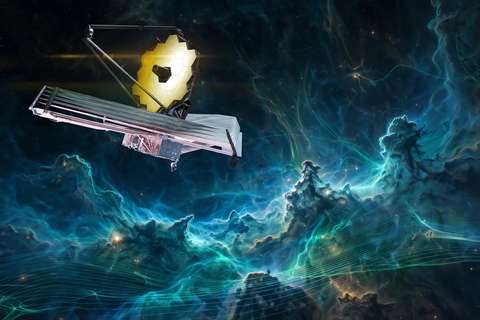
Astronomers have detected the 'forbidden' light of the trihydrogen molecule for the first time ever — a signal predicted 40 years ago but never seen in space or in a laboratory. Using the James Webb Space Telescope, a team led by David Neufeld of Johns Hopkins University found 26 faint spectral lines in the shocked gas of young-star jet HH 168, with the strongest measured at 72 sigma. The same signal also appeared in archive data from another jet, HH 211, giving scientists a new tool to probe ionisation in star-forming clouds.
Astronomers have detected the 'forbidden' light of the trihydrogen molecule for the first time ever — a signal predicted 40 years ago but never seen in space or in a laboratory. Using the James Webb Space Telescope, a team led by David Neufeld of Johns Hopkins University found 26 faint spectral lines in the shocked gas of young-star jet HH 168, with the strongest measured at 72 sigma. The same signal also appeared in archive data from another jet, HH 211, giving scientists a new tool to probe ionisation in star-forming clouds.
Astronomers have detected the 'forbidden' light of the trihydrogen molecule for the first time ever — a signal predicted 40 years ago but never seen in space or in a laboratory. Using the James Webb Space Telescope, a team led by David Neufeld of Johns Hopkins University found 26 faint spectral lines in the shocked gas of young-star jet HH 168, with the strongest measured at 72 sigma. The same signal also appeared in archive data from another jet, HH 211, giving scientists a new tool to probe ionisation in star-forming clouds.
Most read
سب سے زیادہ پڑھی گئی
सबसे ज़्यादा पढ़ी गई
- Loading...
Get news in your inbox
خبریں اپنے ان باکس میں حاصل کریں
खबरें अपने इनबॉक्स में पाएं
One email when new stories are published. No spam, unsubscribe anytime.
نئی خبریں شائع ہونے پر ایک ای میل۔ کوئی سپیم نہیں، کسی بھی وقت ان سبسکرائب کریں۔
नई खबरें प्रकाशित होने पर एक ईमेल। कोई स्पैम नहीं, कभी भी अनसब्सक्राइब करें।