20 Ancient Fossils All Female, Study Finds
20 Ancient Fossils All Female, Study Finds
20 Ancient Fossils All Female, Study Finds
Key points
اہم نکات
मुख्य बातें
- Ancient proteins from the teeth of an extinct human relative suggest a South African cave may have been a burial site for females only.
- Researchers studied 23 teeth from at least 20 Homo naledi individuals found in the Dinaledi Chamber of the Rising Star Cave system and found no trace of Amelogenin-Y, a protein linked to the male Y chromosome.
- The species lived between 335,000 and 241,000 years ago and was discovered in 2013.
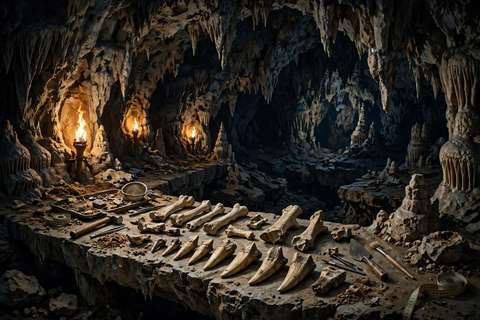
Ancient proteins from the teeth of an extinct human relative suggest a South African cave may have been a burial site for females only. Researchers studied 23 teeth from at least 20 Homo naledi individuals found in the Dinaledi Chamber of the Rising Star Cave system and found no trace of Amelogenin-Y, a protein linked to the male Y chromosome. The species lived between 335,000 and 241,000 years ago and was discovered in 2013. If the chamber was reserved for females, it could be the earliest known sex-specific burial by a human relative other than Homo sapiens. The team, publishing in the journal Cell, cautions that an isolated population could also have lost the gene that produces the male marker.
Ancient proteins from the teeth of an extinct human relative suggest a South African cave may have been a burial site for females only. Researchers studied 23 teeth from at least 20 Homo naledi individuals found in the Dinaledi Chamber of the Rising Star Cave system and found no trace of Amelogenin-Y, a protein linked to the male Y chromosome. The species lived between 335,000 and 241,000 years ago and was discovered in 2013. If the chamber was reserved for females, it could be the earliest known sex-specific burial by a human relative other than Homo sapiens. The team, publishing in the journal Cell, cautions that an isolated population could also have lost the gene that produces the male marker.
Ancient proteins from the teeth of an extinct human relative suggest a South African cave may have been a burial site for females only. Researchers studied 23 teeth from at least 20 Homo naledi individuals found in the Dinaledi Chamber of the Rising Star Cave system and found no trace of Amelogenin-Y, a protein linked to the male Y chromosome. The species lived between 335,000 and 241,000 years ago and was discovered in 2013. If the chamber was reserved for females, it could be the earliest known sex-specific burial by a human relative other than Homo sapiens. The team, publishing in the journal Cell, cautions that an isolated population could also have lost the gene that produces the male marker.
Most read
سب سے زیادہ پڑھی گئی
सबसे ज़्यादा पढ़ी गई
- Loading...
Get news in your inbox
خبریں اپنے ان باکس میں حاصل کریں
खबरें अपने इनबॉक्स में पाएं
One email when new stories are published. No spam, unsubscribe anytime.
نئی خبریں شائع ہونے پر ایک ای میل۔ کوئی سپیم نہیں، کسی بھی وقت ان سبسکرائب کریں۔
नई खबरें प्रकाशित होने पर एक ईमेल। कोई स्पैम नहीं, कभी भी अनसब्सक्राइब करें।