Fingernail-sized chip untangles mixed light into clean beams
Fingernail-sized chip untangles mixed light into clean beams
Fingernail-sized chip untangles mixed light into clean beams
Key points
اہم نکات
मुख्य बातें
- Engineers at Stanford University and colleagues have built a fingernail-sized chip that can take a muddled mixture of light from several lasers and sort it into clean, separate beams.
- It is the first time researchers have shown a device that can take in mixed, partially coherent light and split its photons into distinct beams.
- The work, published in the journal Nature Photonics, turns a physics idea first proposed decades ago into a working device.
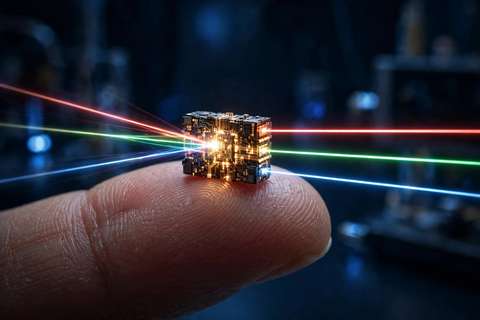
Engineers at Stanford University and colleagues have built a fingernail-sized chip that can take a muddled mixture of light from several lasers and sort it into clean, separate beams. It is the first time researchers have shown a device that can take in mixed, partially coherent light and split its photons into distinct beams. The work, published in the journal Nature Photonics, turns a physics idea first proposed decades ago into a working device. The chip could sharpen microscopes, cameras and telescopes by revealing details that ordinary imaging misses, and the team is now working with NASA to see if it could help study light from distant galaxies.
Engineers at Stanford University and colleagues have built a fingernail-sized chip that can take a muddled mixture of light from several lasers and sort it into clean, separate beams. It is the first time researchers have shown a device that can take in mixed, partially coherent light and split its photons into distinct beams. The work, published in the journal Nature Photonics, turns a physics idea first proposed decades ago into a working device. The chip could sharpen microscopes, cameras and telescopes by revealing details that ordinary imaging misses, and the team is now working with NASA to see if it could help study light from distant galaxies.
Engineers at Stanford University and colleagues have built a fingernail-sized chip that can take a muddled mixture of light from several lasers and sort it into clean, separate beams. It is the first time researchers have shown a device that can take in mixed, partially coherent light and split its photons into distinct beams. The work, published in the journal Nature Photonics, turns a physics idea first proposed decades ago into a working device. The chip could sharpen microscopes, cameras and telescopes by revealing details that ordinary imaging misses, and the team is now working with NASA to see if it could help study light from distant galaxies.
Most read
سب سے زیادہ پڑھی گئی
सबसे ज़्यादा पढ़ी गई
- Loading...
Get news in your inbox
خبریں اپنے ان باکس میں حاصل کریں
खबरें अपने इनबॉक्स में पाएं
One email when new stories are published. No spam, unsubscribe anytime.
نئی خبریں شائع ہونے پر ایک ای میل۔ کوئی سپیم نہیں، کسی بھی وقت ان سبسکرائب کریں۔
नई खबरें प्रकाशित होने पर एक ईमेल। कोई स्पैम नहीं, कभी भी अनसब्सक्राइब करें।