Earth lost a billion years of its history
Earth lost a billion years of its history
Earth lost a billion years of its history
Key points
اہم نکات
मुख्य बातें
- A new study in Nature says the missing billion years in Earth's rock record were erased by forces deep inside the planet, not by glaciers, 404 Media reports.
- Researchers at the University of Wollongong modelled the mantle and found it pushed North America upward about 800 million years ago and held it high for around 200 million years, letting erosion strip away the rock before shallow seas buried the bare surface about 600 million years ago.
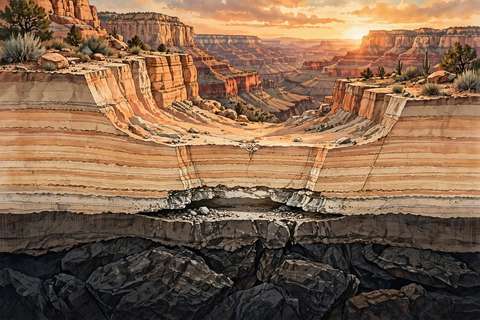
- The gap, called the Great Unconformity, is visible in the Grand Canyon, where 538-million-year-old Cambrian sandstone sits directly on basement rock up to 1.8 billion years old.
A new study in Nature says the missing billion years in Earth's rock record were erased by forces deep inside the planet, not by glaciers, 404 Media reports. Researchers at the University of Wollongong modelled the mantle and found it pushed North America upward about 800 million years ago and held it high for around 200 million years, letting erosion strip away the rock before shallow seas buried the bare surface about 600 million years ago. The gap, called the Great Unconformity, is visible in the Grand Canyon, where 538-million-year-old Cambrian sandstone sits directly on basement rock up to 1.8 billion years old. The authors say the process also explains why the gap is best preserved in North America.
A new study in Nature says the missing billion years in Earth's rock record were erased by forces deep inside the planet, not by glaciers, 404 Media reports. Researchers at the University of Wollongong modelled the mantle and found it pushed North America upward about 800 million years ago and held it high for around 200 million years, letting erosion strip away the rock before shallow seas buried the bare surface about 600 million years ago. The gap, called the Great Unconformity, is visible in the Grand Canyon, where 538-million-year-old Cambrian sandstone sits directly on basement rock up to 1.8 billion years old. The authors say the process also explains why the gap is best preserved in North America.
A new study in Nature says the missing billion years in Earth's rock record were erased by forces deep inside the planet, not by glaciers, 404 Media reports. Researchers at the University of Wollongong modelled the mantle and found it pushed North America upward about 800 million years ago and held it high for around 200 million years, letting erosion strip away the rock before shallow seas buried the bare surface about 600 million years ago. The gap, called the Great Unconformity, is visible in the Grand Canyon, where 538-million-year-old Cambrian sandstone sits directly on basement rock up to 1.8 billion years old. The authors say the process also explains why the gap is best preserved in North America.
Most read
سب سے زیادہ پڑھی گئی
सबसे ज़्यादा पढ़ी गई
- Loading...
Get news in your inbox
خبریں اپنے ان باکس میں حاصل کریں
खबरें अपने इनबॉक्स में पाएं
One email when new stories are published. No spam, unsubscribe anytime.
نئی خبریں شائع ہونے پر ایک ای میل۔ کوئی سپیم نہیں، کسی بھی وقت ان سبسکرائب کریں۔
नई खबरें प्रकाशित होने पर एक ईमेल। कोई स्पैम नहीं, कभी भी अनसब्सक्राइब करें।