Scientists Find 'Dragonball' Organelle in Deep Sea
Scientists Find 'Dragonball' Organelle in Deep Sea
Scientists Find 'Dragonball' Organelle in Deep Sea
Key points
اہم نکات
मुख्य बातें
- Scientists have discovered a microscopic structure unlike any seen before, hidden inside a rare deep-sea mollusc in the South China Sea.
- The team, led by researchers at the Hong Kong University of Science and Technology, named the structure the 'dracosphera', or dragonball, after the manga series, and described it in the journal Nature Communications.
- Each dragonball is a tiny sphere about 10 to 15 micrometres across, wrapped in more than 20 membrane layers, and houses hundreds to thousands of sulfur-eating bacteria that help its host survive in mud with almost no oxygen.
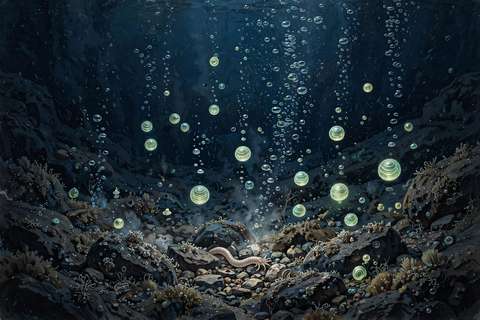
Scientists have discovered a microscopic structure unlike any seen before, hidden inside a rare deep-sea mollusc in the South China Sea. The team, led by researchers at the Hong Kong University of Science and Technology, named the structure the 'dracosphera', or dragonball, after the manga series, and described it in the journal Nature Communications. Each dragonball is a tiny sphere about 10 to 15 micrometres across, wrapped in more than 20 membrane layers, and houses hundreds to thousands of sulfur-eating bacteria that help its host survive in mud with almost no oxygen. The mollusc, Chaetoderma shenloong, known as the divine dragon glistenworm, was named one of the ten most remarkable marine species of 2024.
Scientists have discovered a microscopic structure unlike any seen before, hidden inside a rare deep-sea mollusc in the South China Sea. The team, led by researchers at the Hong Kong University of Science and Technology, named the structure the 'dracosphera', or dragonball, after the manga series, and described it in the journal Nature Communications. Each dragonball is a tiny sphere about 10 to 15 micrometres across, wrapped in more than 20 membrane layers, and houses hundreds to thousands of sulfur-eating bacteria that help its host survive in mud with almost no oxygen. The mollusc, Chaetoderma shenloong, known as the divine dragon glistenworm, was named one of the ten most remarkable marine species of 2024.
Scientists have discovered a microscopic structure unlike any seen before, hidden inside a rare deep-sea mollusc in the South China Sea. The team, led by researchers at the Hong Kong University of Science and Technology, named the structure the 'dracosphera', or dragonball, after the manga series, and described it in the journal Nature Communications. Each dragonball is a tiny sphere about 10 to 15 micrometres across, wrapped in more than 20 membrane layers, and houses hundreds to thousands of sulfur-eating bacteria that help its host survive in mud with almost no oxygen. The mollusc, Chaetoderma shenloong, known as the divine dragon glistenworm, was named one of the ten most remarkable marine species of 2024.
Most read
سب سے زیادہ پڑھی گئی
सबसे ज़्यादा पढ़ी गई
- Loading...
Get news in your inbox
خبریں اپنے ان باکس میں حاصل کریں
खबरें अपने इनबॉक्स में पाएं
One email when new stories are published. No spam, unsubscribe anytime.
نئی خبریں شائع ہونے پر ایک ای میل۔ کوئی سپیم نہیں، کسی بھی وقت ان سبسکرائب کریں۔
नई खबरें प्रकाशित होने पर एक ईमेल। कोई स्पैम नहीं, कभी भी अनसब्सक्राइब करें।