Strongest Evidence Yet of Red Blood Cells Found in Dinosaur Bone
Strongest Evidence Yet of Red Blood Cells Found in Dinosaur Bone
Strongest Evidence Yet of Red Blood Cells Found in Dinosaur Bone
Key points
اہم نکات
मुख्य बातें
- Scientists say they have found the strongest evidence yet of red blood cells preserved in a dinosaur fossil.
- Researchers studying a 115-million-year-old leg bone from a theropod dinosaur found microscopic structures resembling red blood cells, along with chemical traces of heme, a molecule found in the blood protein hemoglobin.
- The study, published in the Proceedings of the National Academy of Sciences, is the first to detect heme inside such structures in a dinosaur fossil.
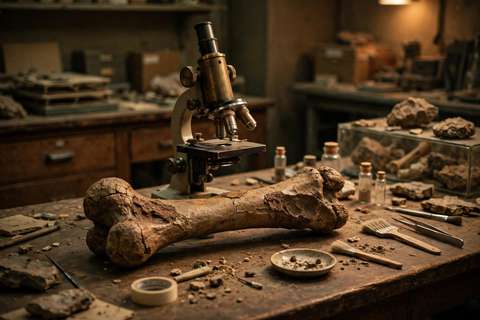
Scientists say they have found the strongest evidence yet of red blood cells preserved in a dinosaur fossil. Researchers studying a 115-million-year-old leg bone from a theropod dinosaur found microscopic structures resembling red blood cells, along with chemical traces of heme, a molecule found in the blood protein hemoglobin. The study, published in the Proceedings of the National Academy of Sciences, is the first to detect heme inside such structures in a dinosaur fossil. Some outside experts remain unconvinced, saying the structures may not be real blood cells.
Scientists say they have found the strongest evidence yet of red blood cells preserved in a dinosaur fossil. Researchers studying a 115-million-year-old leg bone from a theropod dinosaur found microscopic structures resembling red blood cells, along with chemical traces of heme, a molecule found in the blood protein hemoglobin. The study, published in the Proceedings of the National Academy of Sciences, is the first to detect heme inside such structures in a dinosaur fossil. Some outside experts remain unconvinced, saying the structures may not be real blood cells.
Scientists say they have found the strongest evidence yet of red blood cells preserved in a dinosaur fossil. Researchers studying a 115-million-year-old leg bone from a theropod dinosaur found microscopic structures resembling red blood cells, along with chemical traces of heme, a molecule found in the blood protein hemoglobin. The study, published in the Proceedings of the National Academy of Sciences, is the first to detect heme inside such structures in a dinosaur fossil. Some outside experts remain unconvinced, saying the structures may not be real blood cells.
Most read
سب سے زیادہ پڑھی گئی
सबसे ज़्यादा पढ़ी गई
- Loading...
Get news in your inbox
خبریں اپنے ان باکس میں حاصل کریں
खबरें अपने इनबॉक्स में पाएं
One email when new stories are published. No spam, unsubscribe anytime.
نئی خبریں شائع ہونے پر ایک ای میل۔ کوئی سپیم نہیں، کسی بھی وقت ان سبسکرائب کریں۔
नई खबरें प्रकाशित होने पर एक ईमेल। कोई स्पैम नहीं, कभी भी अनसब्सक्राइब करें।