324-Million-Year-Old Fossil Was an Early Insect
324-Million-Year-Old Fossil Was an Early Insect
324-Million-Year-Old Fossil Was an Early Insect
Key points
اہم نکات
मुख्य बातें
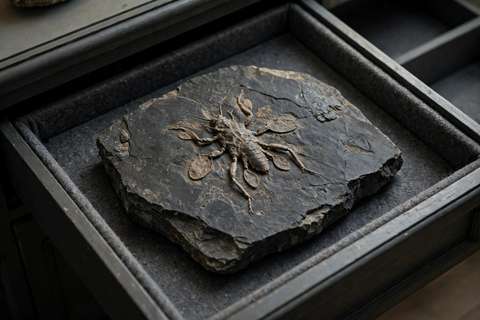
- 324 million years — that is how old a fossil is that spent 40 years forgotten in a drawer at the San Diego Natural History Museum before scientists realised it is one of the earliest known insects on Earth.
- The specimen, collected in Texas in 1985 and labelled as a shrimp-like crustacean in 1991, was re-examined after a Cambridge doctoral researcher spotted it in a textbook and flew to California to look closer.
- Using polarised light, the team found six legs, an egg-laying organ and a tail filament — insect features — alongside paddle-like legs from its crustacean past, and renamed it Chosha praecursor.
324 million years — that is how old a fossil is that spent 40 years forgotten in a drawer at the San Diego Natural History Museum before scientists realised it is one of the earliest known insects on Earth. The specimen, collected in Texas in 1985 and labelled as a shrimp-like crustacean in 1991, was re-examined after a Cambridge doctoral researcher spotted it in a textbook and flew to California to look closer. Using polarised light, the team found six legs, an egg-laying organ and a tail filament — insect features — alongside paddle-like legs from its crustacean past, and renamed it Chosha praecursor. The find helps fill a 60-million-year gap in the fossil record when early insects seemed to vanish, and suggests the first insects lived partly in water before moving onto land. The fossil is now on display at the museum.
324 million years — that is how old a fossil is that spent 40 years forgotten in a drawer at the San Diego Natural History Museum before scientists realised it is one of the earliest known insects on Earth. The specimen, collected in Texas in 1985 and labelled as a shrimp-like crustacean in 1991, was re-examined after a Cambridge doctoral researcher spotted it in a textbook and flew to California to look closer. Using polarised light, the team found six legs, an egg-laying organ and a tail filament — insect features — alongside paddle-like legs from its crustacean past, and renamed it Chosha praecursor. The find helps fill a 60-million-year gap in the fossil record when early insects seemed to vanish, and suggests the first insects lived partly in water before moving onto land. The fossil is now on display at the museum.
324 million years — that is how old a fossil is that spent 40 years forgotten in a drawer at the San Diego Natural History Museum before scientists realised it is one of the earliest known insects on Earth. The specimen, collected in Texas in 1985 and labelled as a shrimp-like crustacean in 1991, was re-examined after a Cambridge doctoral researcher spotted it in a textbook and flew to California to look closer. Using polarised light, the team found six legs, an egg-laying organ and a tail filament — insect features — alongside paddle-like legs from its crustacean past, and renamed it Chosha praecursor. The find helps fill a 60-million-year gap in the fossil record when early insects seemed to vanish, and suggests the first insects lived partly in water before moving onto land. The fossil is now on display at the museum.
Most read
سب سے زیادہ پڑھی گئی
सबसे ज़्यादा पढ़ी गई
- Loading...
Get news in your inbox
خبریں اپنے ان باکس میں حاصل کریں
खबरें अपने इनबॉक्स में पाएं
One email when new stories are published. No spam, unsubscribe anytime.
نئی خبریں شائع ہونے پر ایک ای میل۔ کوئی سپیم نہیں، کسی بھی وقت ان سبسکرائب کریں۔
नई खबरें प्रकाशित होने पर एक ईमेल। कोई स्पैम नहीं, कभी भी अनसब्सक्राइब करें।