Could a Big Bounce explain what came before the Big Bang?
Could a Big Bounce explain what came before the Big Bang?
Could a Big Bounce explain what came before the Big Bang?
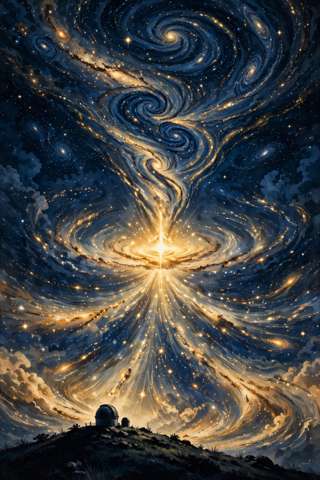
Key points
اہم نکات
मुख्य बातें
- Physicists are testing a new idea about how the Universe might end, and what that could mean for how it began.
- Cornell physicist Henry Tye and colleagues built a model using results from two huge galaxy-mapping projects, the Dark Energy Survey and the Dark Energy Spectroscopic Instrument, which suggest dark energy has changed over time.
- In their model, a theoretical particle called the axion helps drive the Universe apart today, while a negative cosmological constant slowly pulls it back together.
Physicists are testing a new idea about how the Universe might end, and what that could mean for how it began. Cornell physicist Henry Tye and colleagues built a model using results from two huge galaxy-mapping projects, the Dark Energy Survey and the Dark Energy Spectroscopic Instrument, which suggest dark energy has changed over time. In their model, a theoretical particle called the axion helps drive the Universe apart today, while a negative cosmological constant slowly pulls it back together. Expansion would keep accelerating for now, then slow as a crunching phase begins in roughly 11 billion years, followed by a Big Crunch about 8 billion years later. If a crunch were followed by another explosion, a Big Bounce, the Universe could be cyclical, expanding and contracting again and again. The researchers stress this is a model, not a proven answer: what happens after a collapse remains an open question.
Physicists are testing a new idea about how the Universe might end, and what that could mean for how it began. Cornell physicist Henry Tye and colleagues built a model using results from two huge galaxy-mapping projects, the Dark Energy Survey and the Dark Energy Spectroscopic Instrument, which suggest dark energy has changed over time. In their model, a theoretical particle called the axion helps drive the Universe apart today, while a negative cosmological constant slowly pulls it back together. Expansion would keep accelerating for now, then slow as a crunching phase begins in roughly 11 billion years, followed by a Big Crunch about 8 billion years later. If a crunch were followed by another explosion, a Big Bounce, the Universe could be cyclical, expanding and contracting again and again. The researchers stress this is a model, not a proven answer: what happens after a collapse remains an open question.
Physicists are testing a new idea about how the Universe might end, and what that could mean for how it began. Cornell physicist Henry Tye and colleagues built a model using results from two huge galaxy-mapping projects, the Dark Energy Survey and the Dark Energy Spectroscopic Instrument, which suggest dark energy has changed over time. In their model, a theoretical particle called the axion helps drive the Universe apart today, while a negative cosmological constant slowly pulls it back together. Expansion would keep accelerating for now, then slow as a crunching phase begins in roughly 11 billion years, followed by a Big Crunch about 8 billion years later. If a crunch were followed by another explosion, a Big Bounce, the Universe could be cyclical, expanding and contracting again and again. The researchers stress this is a model, not a proven answer: what happens after a collapse remains an open question.
Most read
سب سے زیادہ پڑھی گئی
सबसे ज़्यादा पढ़ी गई
- Loading...
Get news in your inbox
خبریں اپنے ان باکس میں حاصل کریں
खबरें अपने इनबॉक्स में पाएं
One email when new stories are published. No spam, unsubscribe anytime.
نئی خبریں شائع ہونے پر ایک ای میل۔ کوئی سپیم نہیں، کسی بھی وقت ان سبسکرائب کریں۔
नई खबरें प्रकाशित होने पर एक ईमेल। कोई स्पैम नहीं, कभी भी अनसब्सक्राइब करें।