Astronomers deliver the sharpest and deepest view yet of the low-frequency radio sky
Astronomers deliver the sharpest and deepest view yet of the low-frequency radio sky
Astronomers deliver the sharpest and deepest view yet of the low-frequency radio sky
Key points
اہم نکات
मुख्य बातें
- An international team led by Leiden University has used the LOFAR telescope to produce the sharpest and most sensitive image of the low-frequency radio sky ever made, Phys.org reports.
- The image reveals almost 63,000 radio sources, including active galactic nuclei and star-forming galaxies, across a patch of sky about 25 times the area of the full moon.
- Built from 200 hours of observations and 400 terabytes of data, the 8-billion-pixel image is 20 times sharper than the previous best view of the same field and previews what the upgraded LOFAR2.0 telescope will be able to do.
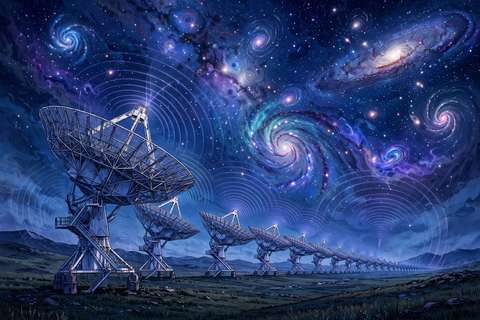
An international team led by Leiden University has used the LOFAR telescope to produce the sharpest and most sensitive image of the low-frequency radio sky ever made, Phys.org reports. The image reveals almost 63,000 radio sources, including active galactic nuclei and star-forming galaxies, across a patch of sky about 25 times the area of the full moon. Built from 200 hours of observations and 400 terabytes of data, the 8-billion-pixel image is 20 times sharper than the previous best view of the same field and previews what the upgraded LOFAR2.0 telescope will be able to do.
An international team led by Leiden University has used the LOFAR telescope to produce the sharpest and most sensitive image of the low-frequency radio sky ever made, Phys.org reports. The image reveals almost 63,000 radio sources, including active galactic nuclei and star-forming galaxies, across a patch of sky about 25 times the area of the full moon. Built from 200 hours of observations and 400 terabytes of data, the 8-billion-pixel image is 20 times sharper than the previous best view of the same field and previews what the upgraded LOFAR2.0 telescope will be able to do.
An international team led by Leiden University has used the LOFAR telescope to produce the sharpest and most sensitive image of the low-frequency radio sky ever made, Phys.org reports. The image reveals almost 63,000 radio sources, including active galactic nuclei and star-forming galaxies, across a patch of sky about 25 times the area of the full moon. Built from 200 hours of observations and 400 terabytes of data, the 8-billion-pixel image is 20 times sharper than the previous best view of the same field and previews what the upgraded LOFAR2.0 telescope will be able to do.
Most read
سب سے زیادہ پڑھی گئی
सबसे ज़्यादा पढ़ी गई
- Loading...
Get news in your inbox
خبریں اپنے ان باکس میں حاصل کریں
खबरें अपने इनबॉक्स में पाएं
One email when new stories are published. No spam, unsubscribe anytime.
نئی خبریں شائع ہونے پر ایک ای میل۔ کوئی سپیم نہیں، کسی بھی وقت ان سبسکرائب کریں۔
नई खबरें प्रकाशित होने पर एक ईमेल। कोई स्पैम नहीं, कभी भी अनसब्सक्राइब करें।