18-million-year-old ape fossil in Egypt could rewrite human origins
18-million-year-old ape fossil in Egypt could rewrite human origins
18-million-year-old ape fossil in Egypt could rewrite human origins
Key points
اہم نکات
मुख्य बातें
- Scientists have found a 17- to 18-million-year-old ape fossil in Egypt that could change what we know about where humans and modern apes come from.
- The newly named species, Masripithecus moghraensis, was found in the Wadi Moghra desert and is the first definitive fossil ape species discovered in North Africa.
- Researchers say it is more closely related to living apes than fossil apes of the same age from East Africa, suggesting the ancestors of modern apes may have emerged in North Africa and the Middle East.
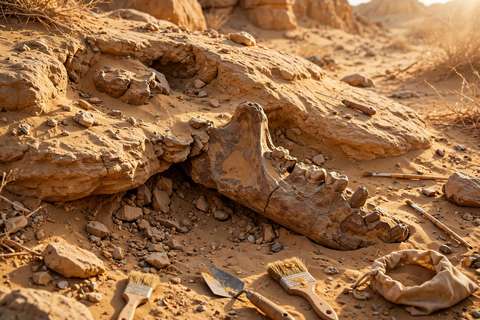
Scientists have found a 17- to 18-million-year-old ape fossil in Egypt that could change what we know about where humans and modern apes come from. The newly named species, Masripithecus moghraensis, was found in the Wadi Moghra desert and is the first definitive fossil ape species discovered in North Africa. Researchers say it is more closely related to living apes than fossil apes of the same age from East Africa, suggesting the ancestors of modern apes may have emerged in North Africa and the Middle East. The study was published in the journal Science.
Scientists have found a 17- to 18-million-year-old ape fossil in Egypt that could change what we know about where humans and modern apes come from. The newly named species, Masripithecus moghraensis, was found in the Wadi Moghra desert and is the first definitive fossil ape species discovered in North Africa. Researchers say it is more closely related to living apes than fossil apes of the same age from East Africa, suggesting the ancestors of modern apes may have emerged in North Africa and the Middle East. The study was published in the journal Science.
Scientists have found a 17- to 18-million-year-old ape fossil in Egypt that could change what we know about where humans and modern apes come from. The newly named species, Masripithecus moghraensis, was found in the Wadi Moghra desert and is the first definitive fossil ape species discovered in North Africa. Researchers say it is more closely related to living apes than fossil apes of the same age from East Africa, suggesting the ancestors of modern apes may have emerged in North Africa and the Middle East. The study was published in the journal Science.
Most read
سب سے زیادہ پڑھی گئی
सबसे ज़्यादा पढ़ी गई
- Loading...
Get news in your inbox
خبریں اپنے ان باکس میں حاصل کریں
खबरें अपने इनबॉक्स में पाएं
One email when new stories are published. No spam, unsubscribe anytime.
نئی خبریں شائع ہونے پر ایک ای میل۔ کوئی سپیم نہیں، کسی بھی وقت ان سبسکرائب کریں۔
नई खबरें प्रकाशित होने पर एक ईमेल। कोई स्पैम नहीं, कभी भी अनसब्सक्राइब करें।