Ancient coins suggest the Iron Age king who brought Rome to Britain was a woman
Ancient coins suggest the Iron Age king who brought Rome to Britain was a woman
Ancient coins suggest the Iron Age king who brought Rome to Britain was a woman
Key points
اہم نکات
मुख्य बातें
- Researchers at Bournemouth University say the Iron Age British ruler Verica, long assumed to have been a man, was in fact a woman.
- Verica ruled the Atrebates tribe in southern Britain and, after being driven from power around AD 40, fled to Rome, an appeal that the Roman historian Cassius Dio says prompted Emperor Claudius to invade Britain in AD 43.
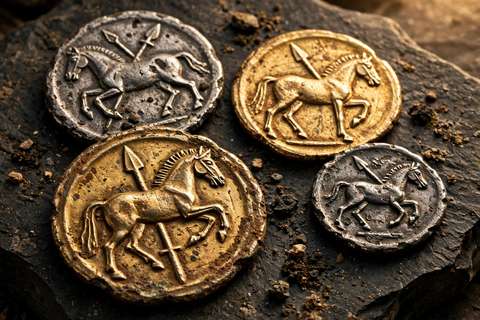
- The case rests on her coins, which show a slender female warrior on horseback, unlike the male warriors on other rulers' coins, and on the Latin title 'rex', which the researchers say was gender-neutral rather than proof of a male king.
Researchers at Bournemouth University say the Iron Age British ruler Verica, long assumed to have been a man, was in fact a woman. Verica ruled the Atrebates tribe in southern Britain and, after being driven from power around AD 40, fled to Rome, an appeal that the Roman historian Cassius Dio says prompted Emperor Claudius to invade Britain in AD 43. The case rests on her coins, which show a slender female warrior on horseback, unlike the male warriors on other rulers' coins, and on the Latin title 'rex', which the researchers say was gender-neutral rather than proof of a male king. Her name also ends in 'a', like the known female leaders Boudica and Cartimandua. The work appears in Current Archaeology and a new book on Caratacus, though other historians note the evidence is not conclusive.
Researchers at Bournemouth University say the Iron Age British ruler Verica, long assumed to have been a man, was in fact a woman. Verica ruled the Atrebates tribe in southern Britain and, after being driven from power around AD 40, fled to Rome, an appeal that the Roman historian Cassius Dio says prompted Emperor Claudius to invade Britain in AD 43. The case rests on her coins, which show a slender female warrior on horseback, unlike the male warriors on other rulers' coins, and on the Latin title 'rex', which the researchers say was gender-neutral rather than proof of a male king. Her name also ends in 'a', like the known female leaders Boudica and Cartimandua. The work appears in Current Archaeology and a new book on Caratacus, though other historians note the evidence is not conclusive.
Researchers at Bournemouth University say the Iron Age British ruler Verica, long assumed to have been a man, was in fact a woman. Verica ruled the Atrebates tribe in southern Britain and, after being driven from power around AD 40, fled to Rome, an appeal that the Roman historian Cassius Dio says prompted Emperor Claudius to invade Britain in AD 43. The case rests on her coins, which show a slender female warrior on horseback, unlike the male warriors on other rulers' coins, and on the Latin title 'rex', which the researchers say was gender-neutral rather than proof of a male king. Her name also ends in 'a', like the known female leaders Boudica and Cartimandua. The work appears in Current Archaeology and a new book on Caratacus, though other historians note the evidence is not conclusive.
Most read
سب سے زیادہ پڑھی گئی
सबसे ज़्यादा पढ़ी गई
- Loading...
Get news in your inbox
خبریں اپنے ان باکس میں حاصل کریں
खबरें अपने इनबॉक्स में पाएं
One email when new stories are published. No spam, unsubscribe anytime.
نئی خبریں شائع ہونے پر ایک ای میل۔ کوئی سپیم نہیں، کسی بھی وقت ان سبسکرائب کریں۔
नई खबरें प्रकाशित होने पर एक ईमेल। कोई स्पैम नहीं, कभी भी अनसब्सक्राइब करें।