280m Deep: Ancient Canyons Hid Earliest Life
280m Deep: Ancient Canyons Hid Earliest Life
280m Deep: Ancient Canyons Hid Earliest Life
Key points
اہم نکات
मुख्य बातें
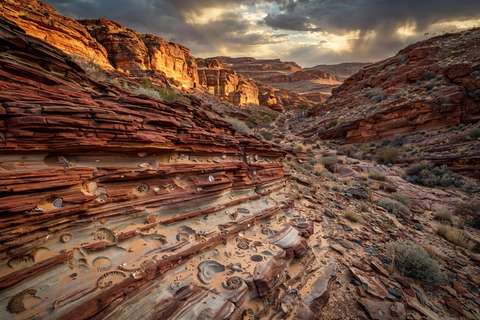
- Giant underwater canyons up to 280 metres deep and more than 6 kilometres wide helped preserve some of the oldest complex life on Earth, scientists in Australia say.
- Geologists from Adelaide University mapped the ancient canyons in South Australia's Flinders Ranges and found they were carved as sea levels fell, then flooded and filled with sediment as seas rose again.
- The process preserved the Ediacaran fossils, soft-bodied creatures from 635 to 539 million years ago that lived before the great burst of animal diversity.
Giant underwater canyons up to 280 metres deep and more than 6 kilometres wide helped preserve some of the oldest complex life on Earth, scientists in Australia say. Geologists from Adelaide University mapped the ancient canyons in South Australia's Flinders Ranges and found they were carved as sea levels fell, then flooded and filled with sediment as seas rose again. The process preserved the Ediacaran fossils, soft-bodied creatures from 635 to 539 million years ago that lived before the great burst of animal diversity. The study was published in the journal Earth and Planetary Science Letters.
Giant underwater canyons up to 280 metres deep and more than 6 kilometres wide helped preserve some of the oldest complex life on Earth, scientists in Australia say. Geologists from Adelaide University mapped the ancient canyons in South Australia's Flinders Ranges and found they were carved as sea levels fell, then flooded and filled with sediment as seas rose again. The process preserved the Ediacaran fossils, soft-bodied creatures from 635 to 539 million years ago that lived before the great burst of animal diversity. The study was published in the journal Earth and Planetary Science Letters.
Giant underwater canyons up to 280 metres deep and more than 6 kilometres wide helped preserve some of the oldest complex life on Earth, scientists in Australia say. Geologists from Adelaide University mapped the ancient canyons in South Australia's Flinders Ranges and found they were carved as sea levels fell, then flooded and filled with sediment as seas rose again. The process preserved the Ediacaran fossils, soft-bodied creatures from 635 to 539 million years ago that lived before the great burst of animal diversity. The study was published in the journal Earth and Planetary Science Letters.
Most read
سب سے زیادہ پڑھی گئی
सबसे ज़्यादा पढ़ी गई
- Loading...
Get news in your inbox
خبریں اپنے ان باکس میں حاصل کریں
खबरें अपने इनबॉक्स में पाएं
One email when new stories are published. No spam, unsubscribe anytime.
نئی خبریں شائع ہونے پر ایک ای میل۔ کوئی سپیم نہیں، کسی بھی وقت ان سبسکرائب کریں۔
नई खबरें प्रकाशित होने पर एक ईमेल। कोई स्पैम नहीं, कभी भी अनसब्सक्राइब करें।